The benefits of art in children's learning
Art and education meet at an essential point: both help people understand the world, express what they feel, and construct their own ideas. When learning includes artistic experiences, a space opens up where imagination coexists with critical thinking and where mistakes become a natural part of the process. In childhood, this type of learning leaves particularly valuable marks.
The benefits of learning through art:
Encourage creativity and problem solving Creating a story with colors, building a figure with simple materials, or imagining a character based on a texture trains the mind to generate options. This practice translates into a very useful skill: seeking different solutions when a challenge arises, both in and out of class.
Strengthen communication and emotional intelligence
Sometimes children cannot find the words to explain what is happening to them. Drawing, modeling, or role-playing allows them to express themselves safely. In addition, observing plays and sharing what they see helps them to pool ideas, listen to others, and learn that there can be several valid interpretations.
Improve attention and patience
An artistic activity requires presence: choosing, trying, adjusting, trying again. Without pressure to do it perfectly, you train your concentration and tolerance for frustration, two pillars that support learning in any subject.
Boosts self-esteem and a sense of achievement
When a child creates something that didn't exist before, they feel that their decisions matter. That healthy pride doesn't depend on a grade, but on the process and the personal result. Over time, that confidence becomes apparent as they participate more in class, dare to ask questions, and share their own ideas.
Develops motor and spatial skills
Cutting, painting, gluing, building, and exploring materials improves coordination and spatial awareness. These skills influence writing, reading, math, and many everyday tasks.

How to implement art education
Integrating art into subjects, not just art classes
Art works very well as a bridge. In science, you can illustrate an ecosystem with collage. In history, you can recreate a period through costumes and objects. In language arts, you can turn a story into a scene or a comic strip. In math, you can work on patterns, symmetries, and shapes through visual creation.
Propose projects with open-ended questions
The best educational art activities often start with a "What if...?" For example:
What would sound look like if it had a shape?
What colors does an emotion have?
What object would you invent to solve an everyday problem?
These questions encourage children to think, decide, and justify, without limiting them to a single answer.
Bringing learning outside the classroom: visiting a museum with your class
A visit to a museum makes content tangible. Seeing works in person, exploring spaces, and participating in guided experiences helps students connect what they have learned with their own perspective. It also promotes teamwork: observing, commenting, asking questions, and drawing conclusions together. If accompanied by an activity before and after the visit (a guiding question, an observation notebook, or a creation inspired by what they have seen), the educational impact is multiplied.
Assess the process using clear and friendly criteria
Instead of evaluating "how nice it turned out," it is better to observe aspects such as: exploration of materials, ability to explain their idea, sustained effort, and progress between attempts. This creates an environment where children feel free to try things without fear.
Use accessible materials and sensory experiences
You don't need a big budget: paper, cardboard, fabric, modeling clay, magazines, stickers, recycled items. Adding textures, smells, lights, or sounds makes learning more memorable and helps each child find their own way to participate.
Create moments for observation and conversation
A mini "museum" in the classroom, a brief round where everyone shares what they did and why, or a question to observe a work together. These spaces teach respect, empathy, and critical thinking, and also improve oral expression.
Experience art as an adventure at Sweet Space Museum
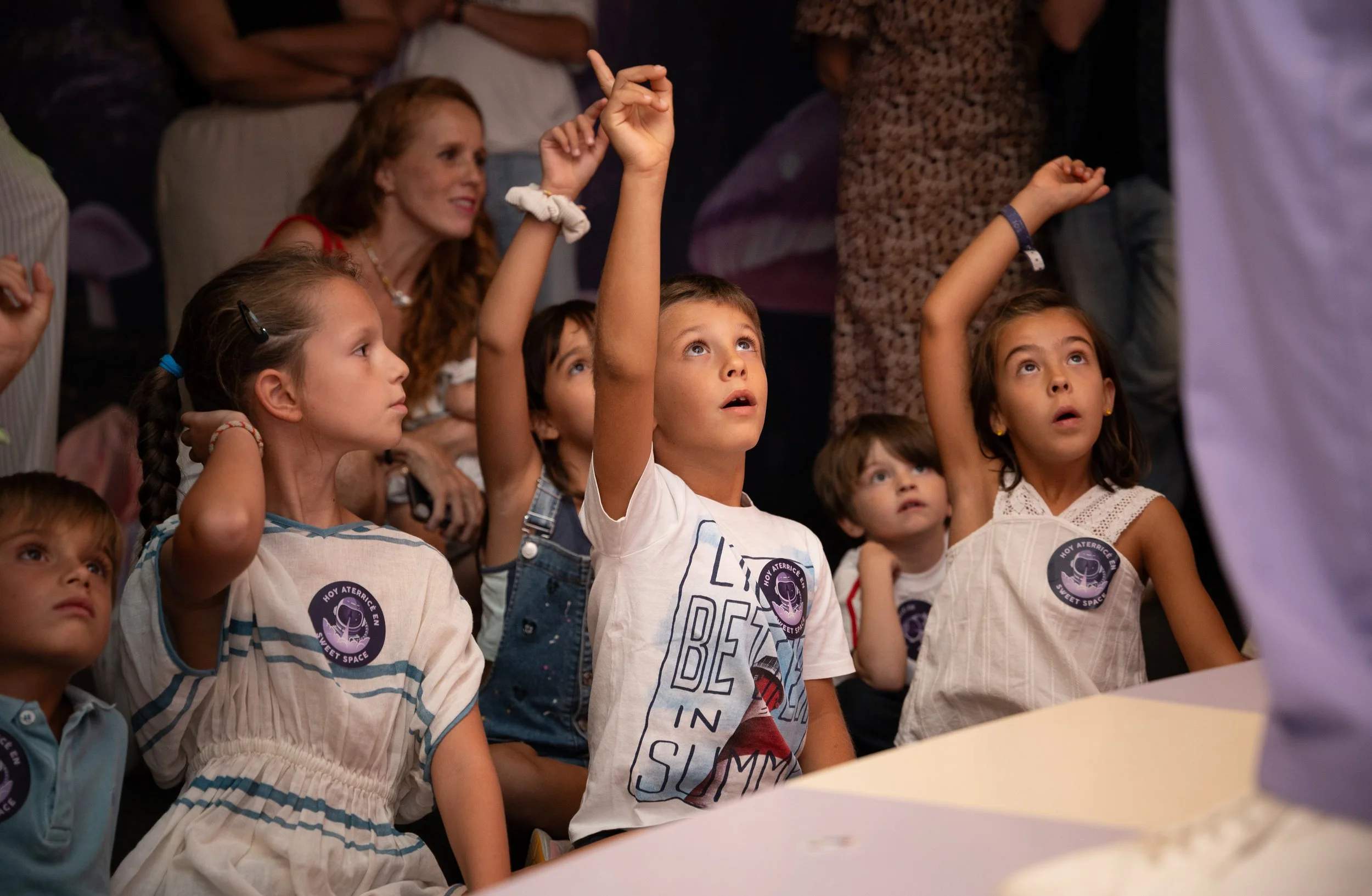
If you are a teacher or part of the school staff, a school visit to Sweet Space Museum can become an educational resource that students will truly remember. The tour offers an immersive experience where art is explored with curiosity, play, and active participation, ideal for developing creativity, communication, and observation skills in an environment different from the classroom.
To ensure that the visit has an educational impact, simple objectives can be set: a guiding question to explore the rooms, an observation challenge for teams, and a creative activity inspired by the experience to be done back in class. In this way, the outing is integrated into the curriculum and becomes a project that connects learning and emotion.
Organize your class's next outing and transform a school morning into a shared artistic experience. Sweet Space Museum is ready to welcome your group and accompany you on a visit that combines inspiration, conversation, and new ideas.